
Great Ormond Street Hospital has a long history of caring for children and young people with facial palsy, including those with Moebius. Professor Grobbelaar led the service for the last decade. He was trained at Mount Vernon by Mr Douglas Harrison, who first described the two-stage procedure for facial reanimation with the pectoralis minor in 1983. Mr Woollard was, in turn, trained by Professor Grobbelaar. He has been running the service for adults at the Royal Free Hospital for the last ten years, and now leads the Great Ormond Street service as well since Prof Grobbelaar retired last year. This has linked up the paediatric and adult facial palsy care and established a strong link for patients to ‘graduate’ through as they grow too old for GOSH. Facial palsy is a condition that needs life-long care and this ensures that patients get continuity.
Most patients are referred to the service soon after birth when a difference in facial expression is noticed. At this visit we can assess the child and give information to the parents. Provided there is no need for urgent treatment (typically for eye protection) and the baby is able to feed and thrive we will next see them at around two years of age to start the discussion about possible interventions.
At four, when it is becoming easier for children to demonstrate a fuller range of expression, it it is possible discuss surgery in more detail and make a plan for the coming years (see below).
We have a strong multi-disciplinary team at Great Ormond Street, from the experienced staff on Panther ward to specialist anaesthetist, physiotherapist and plastic surgery clinical nurse specialists.. We hope that this summary will help prospective patients to better understand the team and what we can offer.
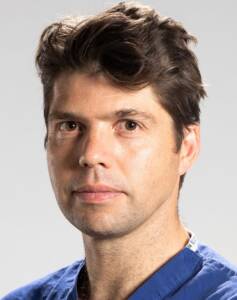
The Surgeon -Mr Woollard is a consultant plastic surgeon. He leads the facial palsy service at Great Ormond Street and The Royal Free London. He has trained in the Mount Vernon school of facial reanimation using free functioning muscle transfers. The mainstay of this approach in children is a two-stage operation in unilateral facial palsy. This involves a cross-facial nerve graft at around the age of 4-5 years. This is where a sensory nerve is taken from the lower leg (sural) and used to bridge the gap from the nerves on the functioning side across to the paralysed side: akin to an extension cable. The typical facial nerve has five main branches: the forehead, the eye, the upper lip, the lower lip and the neck. Those branches all have multiple smaller branches, and the one to the eye and the upper lip also have lots of cross over which means it is possible to ‘borrow’ one. On the functioning side a small branch that makes the upper lip smile is used as the input and the graft run across under the nose to the other ear. The nerve fibres gradually grow along the graft and in 6-12 months reach the other side. At that point, at a second operation, a muscle is taken from the armpit (typically the pectoralis minor) and placed in the paralysed cheek. It needs a blood supply to keep it alive and healthy, and the nerve graft is connected to the nerve that makes it twitch. It doesn’t work straight away, but the nerve makes new connections with the muscle and in 3-6 months it starts to contract. At that point the physiotherapy begins with specialist exercises to help gain control over the movement and optimise the surgical outcome..
In Moebius it is more complicated. There isn’t a facial nerve on either side, so there is no option for a nerve graft. In bilateral facial palsy we need to find an alternative source for the nerve to make the muscle move. In most cases this can be the nerve in one of the biting muscles in the cheek (the masseter). A muscle is taken from each armpit (the latissimus dorsi) and once placed in each cheek, attached to the facial blood vessels and wired up to a branch of the nerve to masseter. This means that, once the nerve has made a new connection, biting will elicit movement from both cheeks emulating a smile. We aim to do this between 8 and 16 years of age because in children they are more able to learn to use that smile with emotion, even though it is powered by biting. It isn’t the same as connecting it to the ‘smiling nerve’ on the other side as we do in unilateral facial palsy, but because it is bilateral and symmetrical it provides expression. At GOSH we prefer to transfer both muscles in a single surgery.
The Anaesthetist – Dr Mae Johnson works at Great Ormond Street as the lead anaesthetist for facial palsy and also as a consultant in intensive care. She has almost a decade of experience looking after children with facial palsy and Moebius Syndrome, as well as a myriad of other complex congenital conditions. Patients are screened via an anaesthetic clinic and she sees them on the day of surgery to confirm plans and answer questions. If you would like more information around the details of preparing your children for surgery then please look at the facial palsy page on the GOSH website.
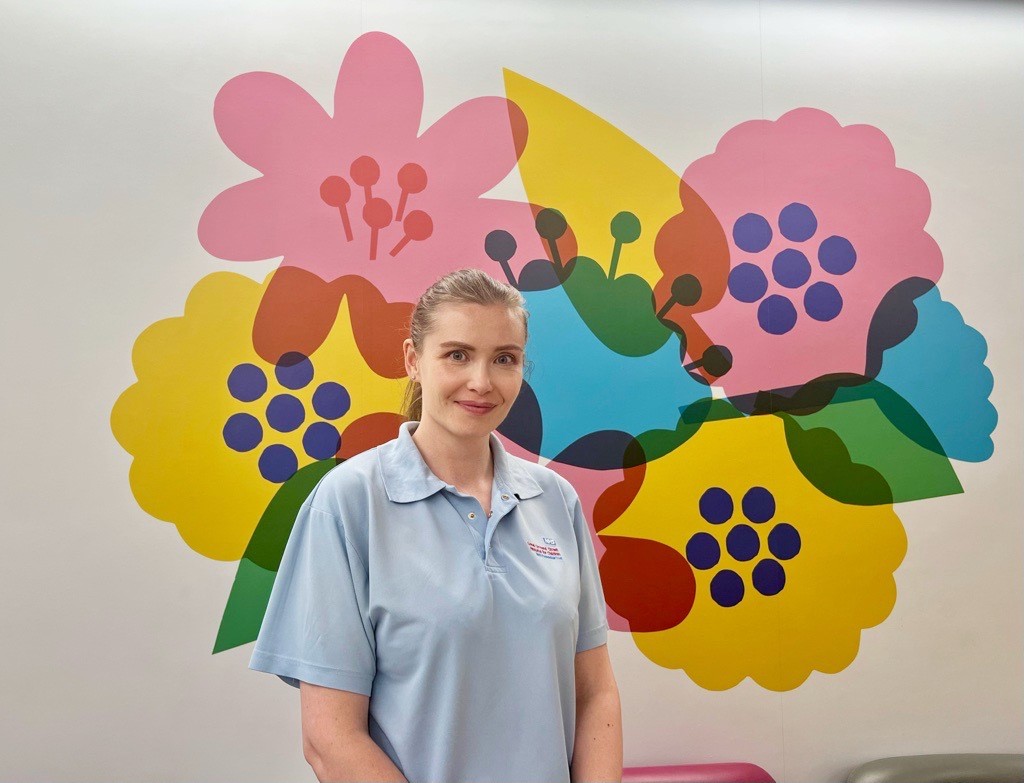 The Physiotherapist – Edel is a physiotherapist working in the plastics surgery department at GOSH and she has a specialist interest in the rehabilitation of children and young people with facial palsy. Most of the surgical treatments are focused on moving the muscles and nerves to allow for movement in the face. The process of learning how to use the transplanted muscle to smile is a new skill and requires frequent practice from the patient. Edel leads and supports that process both with face-to-face and remote facial therapy sessions.. Sessions involve teaching the child about how their smile works, how to massage and stretch the transplanted muscle(s) and a process called functional neuro-muscular re-education. This means training the brain how to control the muscle(s) to produce a smile. One of the reasons for doing this surgery in children is that children brains have remarkable ability to change in response to training- this is known as brain plasticity. Brain plasticity is essential when trying to learn how to produce a mimetic smile; a smile in response to emotion.
Panther Ward – Typically, patients will be admitted through Woodpecker Ward on the day of surgery and will transfer to Panther Ward after the operation which is a highly specialist surgical ward with high dependency beds. The staff on Panther ward are familiar with post-surgical cases of increased complexity and are used to looking after facial palsy patients
Surgery for Moebius reanimation takes 8-12 hours. After this kind of surgery children will have a large head bandage on to reduce the swelling caused by the surgery. This will be removed by the plastics team first thing in the morning after surgery. The muscle flaps need to be closely monitored for 3-5 days. Fluid balance is critical so there is an intravenous drip and a catheter for the first 3 days. After one week the sutures are removed and patients can go home.
 Magpie Ward – Magpie is the outpatient’s facility. It is the first, and last, part of Great Ormond Street that our patients typically see. When you come to your first clinic appointment it will be on Magpie where you will be met by the receptionist and booked in. From there you will see Mr Woollard in his clinic room along with a junior doctor and Edel, the specialist physiotherapist.
Gaynor and Brigitte are the nurses who are the Plastic Clinical Nurses who run the preoperative and dressing Clinics on Magpie. They are experts in removing sutures and changing dressings. With their extensive experience they also follow up in person, via video or over the telephone in a couple of weeks after surgery to make sure that there are no issues and that any questions can be answered.
Play specialists and clinical psychology – We are very fortunate to be able to support our patients with all of the resources at GOSH. We have play specialists and clinical psychologists who are familiar with Moebius syndrome, with facial palsy and the ways in which we manage it, as well as the whole gamut of anxieties that come with being admitted to hospital. They are on hand to support the children (and families!) throughout the process from outpatients through to discharge. In some cases they can do extra sessions prior to admission to help ensure that the journey through surgery is as stress free as possible.